


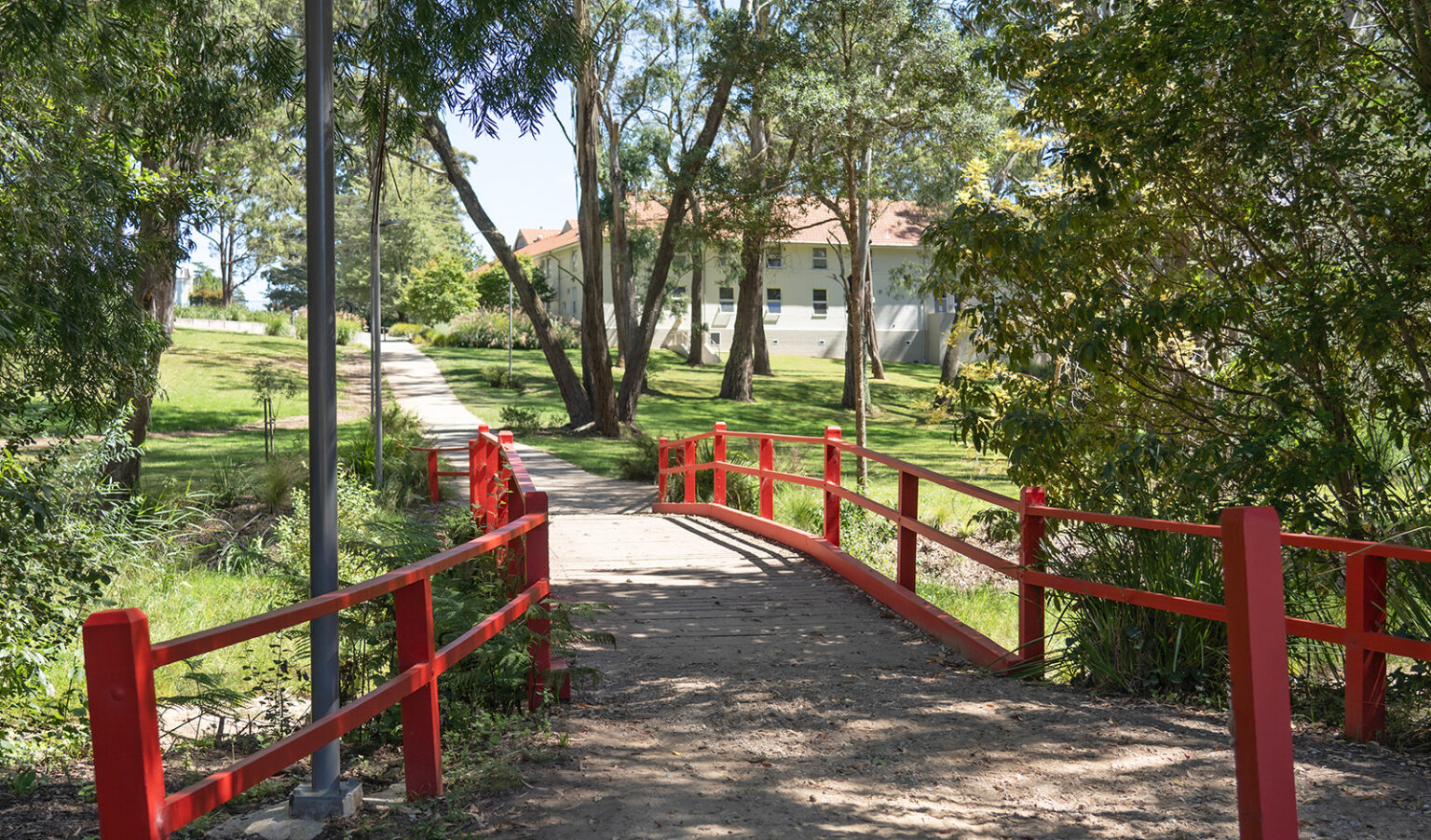
In my role, I have the privilege of meeting and interviewing new students and their families. These first meetings often follow a student-led tour of the campus conducted by two of our current students.
My first question to them is usually, “How was the tour, and what did you think of our campus?” Almost without exception, they comment on our beautiful surroundings, highlighting the vast amount of green space, and on how calm and content our students seem to be.
At Frensham, the connection between immersion in a natural environment with ample green space and the wellbeing of our students is both intentional and highly valued.
Winifred West understood the transformative power of nature as a way for children to not only experience the wider world but also gain a deeper understanding of themselves. In 1917, she wrote:
“We should be thankful that our lot has fallen unto us in such a fairground… it would be difficult to find a more ideal place for a school…with hills and gullies, the bush, the gardens and the creek… who has not felt grateful for the days in the fresh air, in the rain and the sun.”
All our green spaces—our gardens, trees, playing fields, the Lower Holt, the Centenary Trail, the Upper Holt, the Junior School playground, the silver-topped box gum on the front lawn, and more—play a crucial role in the education and development of our students. These spaces offer far more than recreational opportunities; they serve as invaluable learning environments that foster physical, cognitive, emotional, and social development. They provide a plethora of benefits that contribute significantly to growth and wellbeing.
A growing body of evidence highlights that it’s not so much what children know about nature that matters—it’s what happens to them when they are in nature. The more often young people are immersed in natural environments, away from technology, the greater the outcomes for their growth and development. When children are disconnected from the natural world, it can impact not only their individual development but also society as a whole.
As a society, we face challenges in immersing young people in nature and green spaces, free from the distractions of social media. Many Australian children play outside less than once a week; more than a third haven’t been on a bushwalk in the past year, and one in five have never climbed a tree. Alarmingly, more children are now admitted to hospitals for injuries from falling out of bed than from falling out of trees.
Green spaces also provide invaluable opportunities for environmental education and stewardship. Interacting with nature fosters an appreciation for the environment, instilling a sense of responsibility for its conservation. At Frensham and Frensham Junior School, students learn about ecosystems, biodiversity, and sustainability through both classroom instruction and hands-on experiences such as camps, Holting, and the Jamieson Program. By developing a connection to the natural world, we hope our students will become advocates for environmental protection, contributing to a more sustainable future.
Over the past month, students from Year 3 through to Year 10 have participated in a variety of outdoor education experiences. Outdoor education is a key part of our curriculum, supporting the holistic growth of individuals and strengthening the cohesion of year groups.
At Prayers on Monday of Week 7, we reflected on how fortunate we are to learn, live, and work in such beautiful surroundings.
Next time you are on campus, I encourage you to take a moment to immerse yourself in our green spaces, slow down, and reflect on how fortunate we are.